Doctors Online - Medical and Health Care Experts: medical products
Showing posts with label medical products. Show all posts

Sunday, 29 May 2011

Is Anaemia Affecting Your Pregnancy?

Anaemia is a condition when the blood faces a deficit of Red Blood Cells or Erythrocytes. The RBC or Red blood cells are the carriers of oxygen in the body. They help in the exchange of carbon-dioxide from the tissues with the oxygen from the lungs. Hence, a deficiency of RBC results in paleness, tiredness, palpitations, chest ache, etc. The frequency of Anaemia during pregnancy is greater in women because of the extra demand for iron and vitamins. To nourish the developing fetus the mother’s body has to generate more of erythrocytes which are produced in the bone marrow. There can be various reasons for this condition like low iron, folic acid and vitamin B12 in the diet or loss of blood due to other ailments.


However, Anaemia treatment is not a complicated process. The expectant mother should consult her doctor for guidance. At the same time, it is also important to be careful and avoid complications like constipation, diarrhea which can occur which could harm the child. Co-operate with details about your lifestyle and diet with your doctor. Vitamins, minerals and a healthy diet are the easy methods for Anaemia treatment and a healthy child when you have Anaemia during pregnancy.

Monday, 9 May 2011

Angiography: The Procedure

Angiography is an imaging technique which helps to get an x-ray reading of blood vessels and the organs of the body. Angiography, also known as arteriography, mainly focuses on arteries, veins and heart chambers. The term has etymologically Greek with the roots “angeion” meaning vessel and “graphein” meaning to record.

The traditional method is to apply a radio-opaque essence, or dye, to compose the blood vessels visible under x-ray. Angiography is done using x-rays catheters, computed tomography, and magnetic resonance imaging. There are many kinds of angiographies and two of them are coronary angiography related to the heart and cerebral angiography related to the cerebrum, the brain. 


Coronary angiography emphasizes on the inside of the coronary arteries shown by the special x-rays using dyes. It is done to examine the narrowing of coronary arteries supplying oxygen-rich blood to the heart. Coronary Heart Disease (CHD) or Coronary Artery Disease (CAD) is when a material call plaque builds up inside the coronary walls and narrows them.

Angiography is generally harmless with rare major complications but the potential risks may be heart attack, stroke, trauma to artery, irregular heart beats, allergies to dye or medication, perforation of heart or artery, kidney damage, excessive bleeding, infection, blood clots and radiation exposure from the X-rays. Celebral Angiography helps to visualize the medical images of the blood vessels surrounding the brain allowing the detection of abnormalities. This was pioneered by Egaz Moniz in 1927.

Friday, 6 May 2011

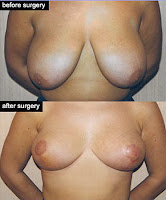
What Breast Reduction Surgery May Do For You

We almost hear everyday about botox and liposuctions and silicon implants! But breast reduction surgeries are still in the covers. The actual name of this procedure is Breast Reduction Mammoplasty. In this surgical procedure, the excess breast fat, glandular tissue and skin are removed to achieve the proportionate breast size,

This surgery is done in cases when breasts limit the physical activity, experience of experience back, neck and shoulder pain caused by the weight of breasts, regular indentations from bra straps that support heavy, pendulous breasts, skin irritation beneath the breast crease, breasts hang low and have stretched skin, nipples rest below the breast crease when your breasts are unsupported and enlarged areolas caused by stretched skin.

This surgery is to alleviate the discomfort associated with overly large breasts. The procedure includes anchor shaped reduction. This goes around the areola and proceeds downward along the natural curve of the area beneath the breasts. After the removal of the excess glands, fat and skin tissues, nipples and areolas are moved into their new positions. The shaping and replacement of the skin takes place next, but usually only after excess fat tissue is removed from the armpits if necessary.

The breast reduction surgery is generally harmless and there can be some pain involved during the healing process but it would subside sooner if care is taken and diet and health advices are heeded.

Monday, 25 April 2011

Caesarean Sections - Only For Emergencies

The pregnant women are generally opting for caesarean section these days. Though, one needs to think it again to go for caesarean section. The main dis-advantage of C - section is that it might pose a treat in your baby’s respiratory organ. As per the research it has been found out that the caesarean baby are 4 times more prone to respiration problems than those delivered through normal vaginal delivery. The maximum elective C- section is done on 37th or 38th week of the pregnancy which is again not good to baby’s health.

The research done indicated that only 2.8% babies born through vaginal delivery on 37th week are prone to breathing problem against 10% of babies born by caesarean section. If done on 39th month, this figure drops drastically with only 1.1 % babies getting affected if delivered through vaginal delivery and 2.1 percent for caesarean infants. The babies who face respiratory problems are placed in incubators and are given oxygen treatment.

Caesarean Procedure was first used as a life saving treatment for the baby and mother and should be utilized for that purpose only. The pregnant women should try to give a normal vaginal birth to the babies to ensure better chances of delivering the healthier babies.

Wednesday, 13 April 2011

General Anesthesia - The Drawbacks

In modern time, generally the patient takes for granted the usage of anesthesia by the doctors, in order to curb us from the painful experience during surgery. But it had not been this simple before. A several years of experimentation has gone, which even led to deaths and some horrid results before invent of safe anesthesia.


The first usage of anesthesia was done in 1982 by Dr. Crawford W. Long of Athens, Ga during an operation. It came into prominence in the year 1844 by Dr. Horace Wells, a dentist of Hartford, Conn., as he inhaled the gas to painlessly extract his tooth. A lot of care needs to be administered while using any form of anesthesia, be it general anesthesia or local anesthesia.

Sunday, 10 April 2011

Angiography - Knowing The Top Medical Term

Angiography is a technique of examining the internal organs of the human body. Normally during the angiography procedure, veins, arteries and heart chambers are normally scrutinized. The angiography process can be divided into many types like cerebral angiography, x ray study blood vessels, pulmonary angiography, coronary angiography, kidney angiography as per the patients' requirement.


One of the most common types of angiography is Coronary angiography. It is done to envisage the blood in the coronary arteries. In this form of angiography a long, thin, flexible tube called a catheter is utilized to manage the x-ray disparity agent at the desired area. It is then beaded into an artery in the groin or forearm.

Wednesday, 30 March 2011

Angiography - The peek inside the Heart

The word Angiography reminds of the graph with haphazard lines going up and down with the pulse rate of the heart. But angiography has nothing to do with graphs. It is medical photography in simple terms. Medically, it is an imaging technique using X-ray examination of blood vessels or heart chambers including veins and arteries.

The roots of this word can be traced back to Greek language with angeion meaning ‘vessel’ and graphein meaning ‘to write or record’. The process is called angiography or arteriography and the image is called angiograpgh or angiogram. This technique was first developed in 1927 by Portuguese physician and neurologist Egas Moniz.

The percentage of complications in coronary angiography is as low as 1 in 1000. Death, myocardial infarction, stroke serious ventricular arrhythmia, and major vascular complications each occur in less than 1% of patients undergoing catheterizations. These include Cardiac arrhythmias, kidney damage, blood clots (which can cause heart attack or stroke), hypotension and pericardial effusion and many more. Whatever may be the complications, the improved technology leaves negligible scope for error. The improved technology not only includes machines but also virtual online doctors who help us in many different ways.